2.3.14

Vinilija @ Radio MARŠ: Yma Sumac


THE VOICE OF THE XTABAY
conducted by Les Baxter

TAITA INTY (Virgins of the Sun God)
This traditional Incan hymn dates back to 1000 B.C. and is musical keystone to Incan worship of the Sun God. With the Spanish conquest and the attempt to convert the natives to Catholicism, this hymn was forbidden. It not only was in conflict with church teachings but evoked such a deep emotional response in the people that it incited rebellion against the new authorities.

ATAYPURA (High Andes)
The Andes fil with awe and affection the hearts of the natives who live in this constant mountain grandeur. Here are the voices of the people, mixed with the voices of the winds, a chorus of man and the elements, surviving and exulting side by side.

ACCLA TAQUI (Chant of the Chosen Maidens)
The highest honor that could befall an Incan girl was to be chosen, whe she reached her sixth birthday, to join the ranks of maidens whose next ten years would be devoted to religious training and veneration of the Sun God. At the age of sixteen the girls were given their choice - to remain virgins and spend the rest of their life in sacred wordk or to rejoin the community and become a wife and mother, a role less sacred but no less honored.

TUMPA (Earthquake)
One of the most popular numbers in Yma Sumac's repertoire is an exciting vocal interpretation of that terrifying phenomenon - the earthquake. Earthquakes, responsible for squeezing and shoving the Andes high into the sky through eons of time, plagued the ancient Incas and still plague their descendants. Yma Sumac's voice here rumbles deeply as the earth shakes, then soars into flight like a covey of frightened birds.

CHOLADAS (Dance of the Moon Festival)
In what was a forerunner to the modern beauty contest, the loveliest of the Incan maidens were put to the test during a celebration thta come with the full moon. Chosen not only for their tasks, the girls would start at moonrise and dance till midnight, their white and gold regalia shimmering in the cool silver of the evening. At midnight the best dancer - more often than not the only one who was able to survive the rigorous marathon - was proclaimed Maiden of the Mother Moon.

WAYRA (Dance of the Winds)
To people living on the storm-swept peaks of the Andes, the wind is not only a part of their life but their religion. The young people, participating in Incan ritual, climb high up the treacherous mountains and expose themselves to the chilling blasts, dancing in wild exuberance, exulting in their youth and love, and purifying themselves with the sharp, clean wind that wraps itself around them while they worhsip their ancient gods.

MONOS (Monkeys)
The high forests of Peru are filled with all kinds of birds and beasts, all with their singular voices and manner of speech. Some of the birds speak with a lyrics loveliness, some ot the beasts roar and growl, but it is the monkeys who are the chatterboxes, who seem to have more to say than anyone. Moises Vivanco tells the story of the monkeys and Yma Sumac sings it.

XTABAY (Lure of the Unknown Love)
Xtabay, a lovely young Incan virgin, fell in love wiht a high prince of an Aztec kingdom. It was a forbidden love, however, for he was high born and she was but a simple peasant. The young girl, unable to keep the secret in her heart, sang to the mountains, the winds, whoever would listen to her song. Her voice was so penetrating and enchanting that ultimately it reached and killed the far-off prince.


INCA TAQUI - Chants of the Incans
conducted by Moises Vivanco

K'ARAWI (Planting song)
The sowing of seeds for the year's big crops, like all the significant moments of Incan life, was elaborately celebrated. On the first day of planting, the king himself worked alone, tilling the soil with a golden plough, and on the next day his people took up the task with appropriate ceremony. Music accompanied this activity, rhythmic chanting that gave movement and spirit to the workers. It was performed only by a group of women singers specially chosen for the occasion, and it is one of their songs that Yma Sumac sings here.

CUMBE-MAITA (Calls of the Andes)
From childhood, every Incan has learned the loud, expressive chants that carry news from one mountain farm to another. The chants have no words, but the ifinite variations of their melodies tell of every daily affair and sudden emergency that people need to communicate. For many centuries these musical messages have linked the Incans throughout the vas Andean area in which they live, transmitting information with a speed that modern inventions barely equal. Yma Sumac, who was born in a mountain range called Cumbe-Maita, sings the calls of her homeland.

WAK'AI (Cry)
A great cry of protest sprang from the Incans under the impact of invading Europeans, for they suffered the destruction of much of their civilization and the death of millions of their people. Wak'ai is their fervent prayer to the Sun God, a mournful chant that tells him of their misery and asks him to forgive human cruelty and allow the bright sun of brotherhood to shine again. This spirit of comradeship binds the Incans, and the message of this song is known and loved in all the villages of the Andes.

INCACHO (Royal Anthem)
No ceremony extends further back into the dim beginnings of Incan tradition than the coronation of a new king. Incacho is one of the many songs of that event's month-long celebration - a solemn song reminding the king of his great responsibilities to his people. It is sung by Yma Sumac as it was performed by a Princess of Music - a singer to whom royal respect and privilege were given because of her great talent.

CHUNCHO (The Forest Creatures)
The music of the Incans was inspired, in greatest part, by teeming variety of mysterious sounds of nature about them. And, as Inca maidens have done for many centuries before her, Yma Sumac has wandered through the forests of the upper Amazon, listening to their waking life, and calling to their creatures in imitative cries. That is the music of Chuncho, the wild, unearthly sounds of monkeys, jackals, and especially a fantastic host of colorful and chattering birds. Yma Sumac's singing is climaxed by her phenomenal "double-voiced" trill.

LLULLA MAK'TA (Andean Don Juan)
Like all peaceful peoples, the Incans had moments for gay banter about the lightest of subjects - and love. Llula Mak'ta is the song an Inca girl sings to a handsome, and insincere, lad widely known for his skill in winning feminine hearts. This he usually accomplishes by magical potions, a snake-head charm, and promises of an exciting life in the big city. But with the girl of this song, his tricks are to no avail; she jokes about his failure and leaves him with a laughing toss of her head.

MALAYA! (My Destiny)
The strong musical tradition of the Incans was influenced, but never destroyed, by the Spanish and Christian colonists who came to their land. Malaya! is an example of that influence, a part of the celebration honoring Senor de los Milagros, Jesus of the Miracles. It begins with a solemn precessional, and then becomes the music for a great dance festival that followed the religious ceremonies. The chant is a deep and soulful plea to God to save the Incans from times of darkness and trouble.

RIPUI (Farewell)
In the rugged Andean mountains, where travel is most difficult, the arrival and departure of visitors are important events. The hospitable Incans love to welcome guests from the world outside, and thier moment of leave-taking is very sad. The day must be chosen carefully - a gray one, so the traveler may "leave with the clouds, weeping like the rain". Yma Sumac sings the song of a visitor bidding farewell. It has only three words but they are full of meaning, for each is a cry of love. "When I go," the song says "my words will be

7.1.14

Mihael Hrustelj Trio - Libido (Live Studio Session)


Vinilija @ Radio Marš 5.1.2014: Deuter - Aum


Brian Jackson & Gil Scott-Heron


Gil Scott-Heron - Offering 

We have something to offer you
We have music to offer you

Spirits may come into view
We have spirits to offer you

Seasons my change
And feelings may change
But music remains

Seasons may change
And feelings may change
But music remains and it fills you

We have something to offer you
We have new love to offer you
And music to offer you
And spirits to offer you
And new love and music to offer you

We have

Vangelis


Vangelis - We were all uprooted

We were all uprooted
The earth was stolen from beneath our feet
We became a Diaspora
An unnamed nation of bastards

We channeled our roots to the pulse of light
Deep within the galaxies of our mind
Our breath was the sky

Our dreams were water
We claimed the wilderness
We recognized each other


23.12.13

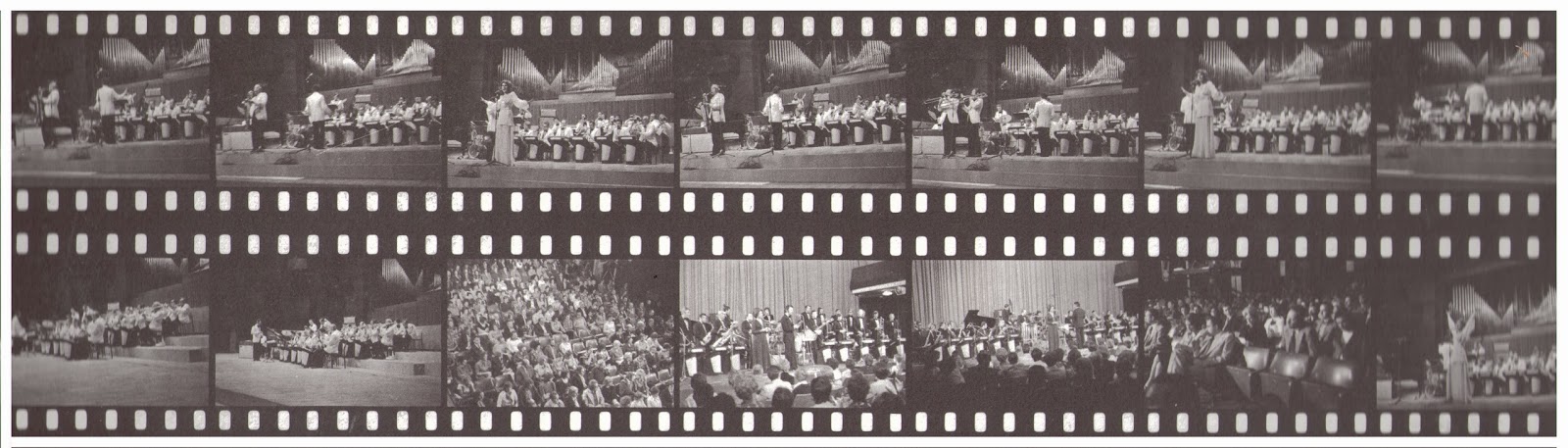
Vinilija @ Radio Marš 15.12.2013: The Big Band RTV Zagreb - Intima (Jugoton 1972)


Plesni Orkestar Radio-Televizije Zagreb - Intima

A1 Tužno Jutro (Ićo Kelemen)
A2 Pro samba (Silvije Glojnarić)
A3 Sretna kuća (Miljenko Prohaska)
A4 Ti koji znaš (Ladislav Fidry)
A5 Povratak Rikija (Stipica Kalogjera)
A6 Quiz-Balet (Ozren Depolo)

B1 Sjećanje na Patelina (Miljenko Prohaska)
B2 Intima (Miljenko Prohaska)


The Bib Band RTV Zagreb:
Franjko Karlović, Stanko Brichta, Marijan Domić, Stipica Kalogjera - tpts
Ladislav Fidry - tp, flh
Vladimir Sučić, Hrvoje Brajer - tbns
Ante Opašić - btb
Ićo Kelemen - tb, valve tb
Ozren Depol - cl, ss, as
Bojan Hohnjec - cl, as
Boris Frančišković - bcl, ts
Marijan Ščukanec - cl, ts
Maks Johan - bs
Zlatko Dvoržak - p
Krešimir Remeta - bg, b
Silvije Glojnarić - dm
Boško Petrović - vib, marimba

Guests:
Bonnie Lynn Adelson - tym, USA (B1)
Rupert Clemandore - conga, TRINIDAD (B1)
Stanko Selak - tp (B1)
Salko Mujičić - fl (B1)
Miroslav Sedak-Benčić - fl (A1, 4)
Srećko Zubak - org (A1, 2, 4, 6)
Brane "Lambert" Živković - org (B1)
Marijan Makar - g (A3)
Svemir Opara - g (A6, B1)
Boris "Tex" Benini - perc (A6, B1)
"Zagrebaćki kvartet" (J. Klima, I. Kuzmić, A. Živković, J. Stojanović) (B1)

7.12.13

Huda Kava Mix: Kozmonaut - ...The One You Love...


“People say, 'I'm going to sleep now,' as if it were nothing. But it's really a bizarre activity. 'For the next several hours, while the sun is gone, I'm going to become unconscious, temporarily losing command over everything I know and understand. When the sun returns, I will resume my life.'

If you didn't know what sleep was, and you had only seen it in a science fiction movie, you would think it was weird and tell all your friends about the movie you'd seen.

They had these people, you know? And they would walk around all day and be OK? And then, once a day, usually after dark, they would lie down on these special platforms and become unconscious. They would stop functioning almost completely, except deep in their minds they would have adventures and experiences that were completely impossible in real life. As they lay there, completely vulnerable to their enemies, their only movements were to occasionally shift from one position to another; or, if one of the 'mind adventures' got too real, they would sit up and scream and be glad they weren't unconscious anymore. Then they would drink a lot of coffee.'

So, next time you see someone sleeping, make believe you're in a science fiction movie. And whisper, 'The creature is regenerating itself'.”

George Carlin


4.11.13

Vinilija @ Radio Marš: 3.11.2013 Igor Nazaruk Quartet, Jože Privšek


1. Igor Nazaruk Quartet - Statement (Melodia 1978)
From Olympic Village 1976


A1 On the quay (M. Kazhlaev, arr. Nazaruk II)
A2 N. and A. (I. Nazaruk)
A3 It will stay with us. Arrangement on Vagif Mustafa-Zadeh, "The keys, brushes, string theory" (I. Nazaruk)

B1 Clash (W. Montgomery, arr. Kuznetsova)
B2 Alfie (B. Bakkarak)
B3 Statement (J. Feliciano, arr. Nazaruk II)

Igor Nazaruk - piano, elektrorgan
Alex Kuznetsov - electric guitar, acoustic guitar
Alex Isplatovsky - double bass, bass guitar
Andrei Chernyshev - drums, bongos

2. RTV Big Band Ljubljana - Jože Privšek - Sprehod Po Galeriji (1975)


Sprehod Po Galeriji (A stroll through the Gallery - 1975) is an impressive composition by Jože Privšek, actually a suite in three partitions with a coda of different styles and moods - as though one was surrounded by a variety of paintings in an Art Gallery. The composer who permanently works with the band as arranger and conductor knew to give way to the outstandind soloists. The introductory rhapsodical part is played by SIlvo Stingl on electric piano accompanied by Lado Rebrek on bass. The ensuing theme is a moderate jazz rock bit with the improvisations by Tone Janša on saxophone and Petar Ugrin on trumpet. The third bluesy theme features the clarinet of Ati Soss. Starting in pianissimo it gradually builds up in dynamicity and expresssion until the brass section comes in strongly with a gospel theme in new tonality. This part features drums solo by Ratko Divjak. The composition is concluded by the tenor saxophone that fades away.
Text by Igor Andrejčič


28.10.13

Vinilija @ Radio Marš: 27.10.2013 Tiit Paulus


Tiit Paulus - Tiit Paulus And Friends (Melodia 1980)

Tiit Paulus (born 1945) has played on several Estonian records - but this is the first LP he can call his very own. He has mastered the guitar himself, with no formal schooling. At the age of fifteen Tiit Paulus played in the Nomme House of Culture dance band, and four years later he introduced himself as a promising guitarist at the Talinn Jazz Festival. The talented jazz guitarist soon developed considerable skill in other genres, as well. Before long, Tiit Paulus became the most sought-after guitarist in Estonia; simultaneously he played in a number of bands. Having performed in various groups for ten years, he stayed on with the Variety Orchestra of the Estonian TV and Radio in 1974. It was there that he started his collaboration with the saxophone player Arvo Pilliroog. The original duo has reached a high level of mastery in the many-featured field of chamber jazz music. Their performances in Estonia as well as in Riga, Novosibirsk, Tbilisi etc., and their recent EP all confirm it.
The duo plays on the A side of the LP. Both musicians show unexceptionable compatibility, skillful technique, and wonderful talent for improvisation. Depending upon the musical character of the pieces, their improvisations vary from the lyrical compositions of Tiit Paulus to the Spanish-influenced melody of Joaquin Rodrigo and the typical bepop theme of great jazz musician Charlie Parker. Suprisingly enough, the pointedly rhytmic character of "Moose The Moche" asserts itself, although there are but two players and no permeating rhytmical background can be traced.

On the B side one gets a chance to listen to Tiit Paulus playing in three groups of different size. Uno Naisoo's "Pastoral" is a classical piece of Estonian jazz music, but Tiit Paulus, "Topi" and Tonu Naissoo's "Janne" are novelties. Besides Tiit Paulus and Arvo Pilliroog, we can hear the percussionist Peep Ojavere, the double bass player Toivo Unt, and the pianist Tonu Naissoo here. In one of the pieces there performs also the tenor saxophone player Lembit Saarsalu. All these musicians belong to the elite of the Estonian jazz music.

It is always interesting to listen to the solo performances of Tiit Paulus. German Lukyanov's "Empty Words" has been recorded by Tiit Paulus only. Thanks to the modern technology, the studio engineers have achieved the sound effect of a guitar band, although it is just Tiit Paulus himself who has recorded all the three parts.
text by Valter Ojakaar

A
Sunday (T. Paulus)
Aranjuez (J. Rodrigo)
Moose The Mooche (C. Parker)

B
Pastoral (U. Naissoo)
Topi (T. Paulus)
Empty Words (G. Lukyanov)
Janne (T. Naissoo)

Tiit Paulus, electric guitar (1-3, 5-7), acoustic guitar (4)
Arvo Pilliroog, saxophones (1, 2, 4, 5), clarinet (3)
Tonu Naissoo, electric piano (4, 5, 7)
Peep Ojavere, percussion instruments (4, 5, 7)
Toivo Unt, double bass (4, 5), bass guitar (7)
Lembit Saarsalu, tenor saxophone (5)

Sound recording E. Tomson
Editor E. Pillau
Designed by J. Arrak